


TL;DR
A plain ViT is all stereo needs
Stereo reconstruction is one of the last remaining computer vision tasks where all state-of-the-art methods employ a heavy architectural inductive bias. Even though it has been demonstrated that the task can be solved using general-purpose methods, it is widely believed that inductive biases in stereo are strictly necessary for both high-quality results and computational efficiency. We challenge this paradigm.
We demonstrate that both state-of-the-art accuracy and superior runtime efficiency are achievable with a model completely devoid of architectural inductive biases, relying instead on a simple, end-to-end Vision Transformer. By training on massive synthetic datasets, we show that pure data-driven learning can surpass explicitly engineered geometry. This work proves that explicit inductive biases are no longer a prerequisite for stereo matching, ultimately unlocking true scaling laws for continuous improvement in 3D reconstruction.
Qualitative results
Interactive comparisons
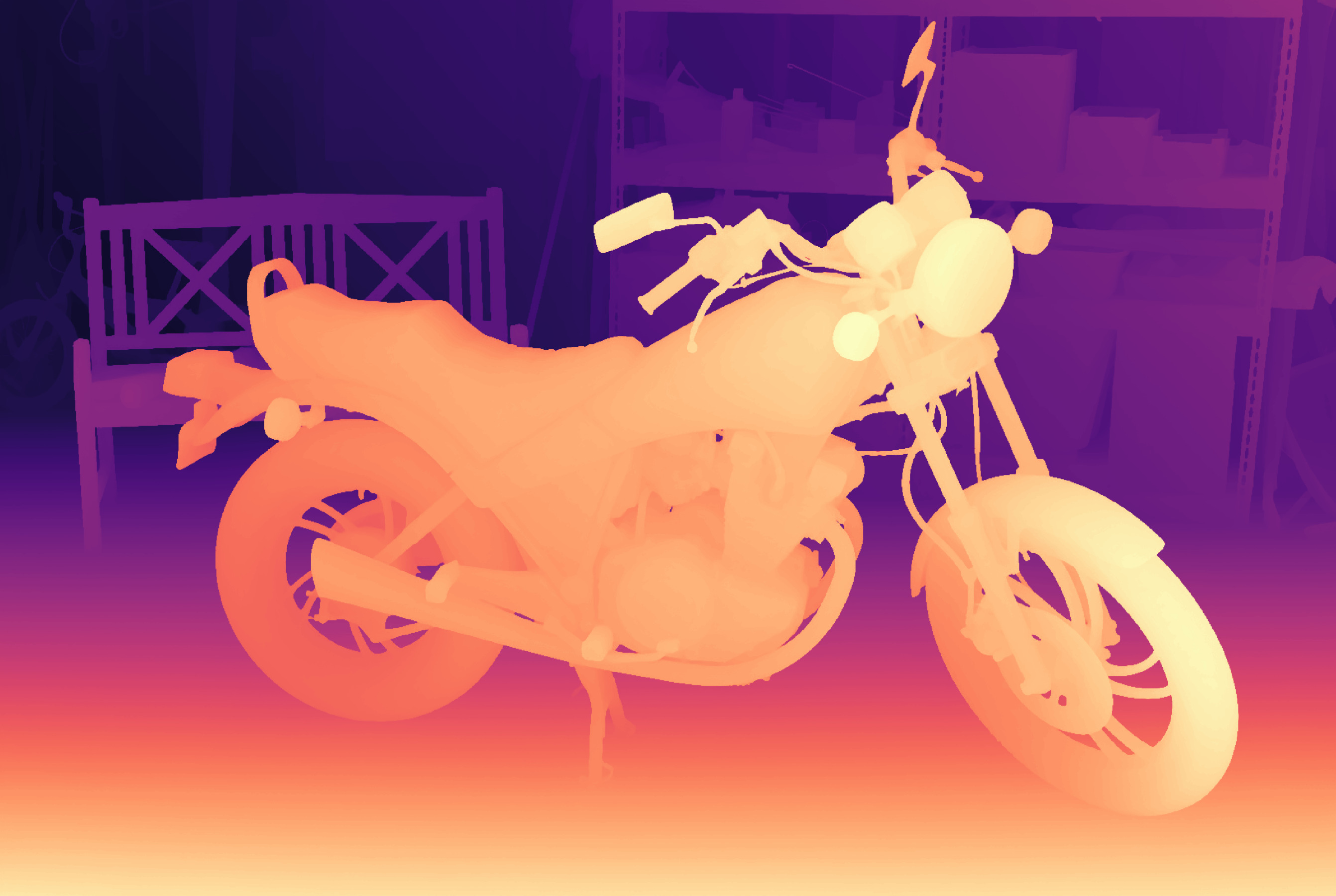
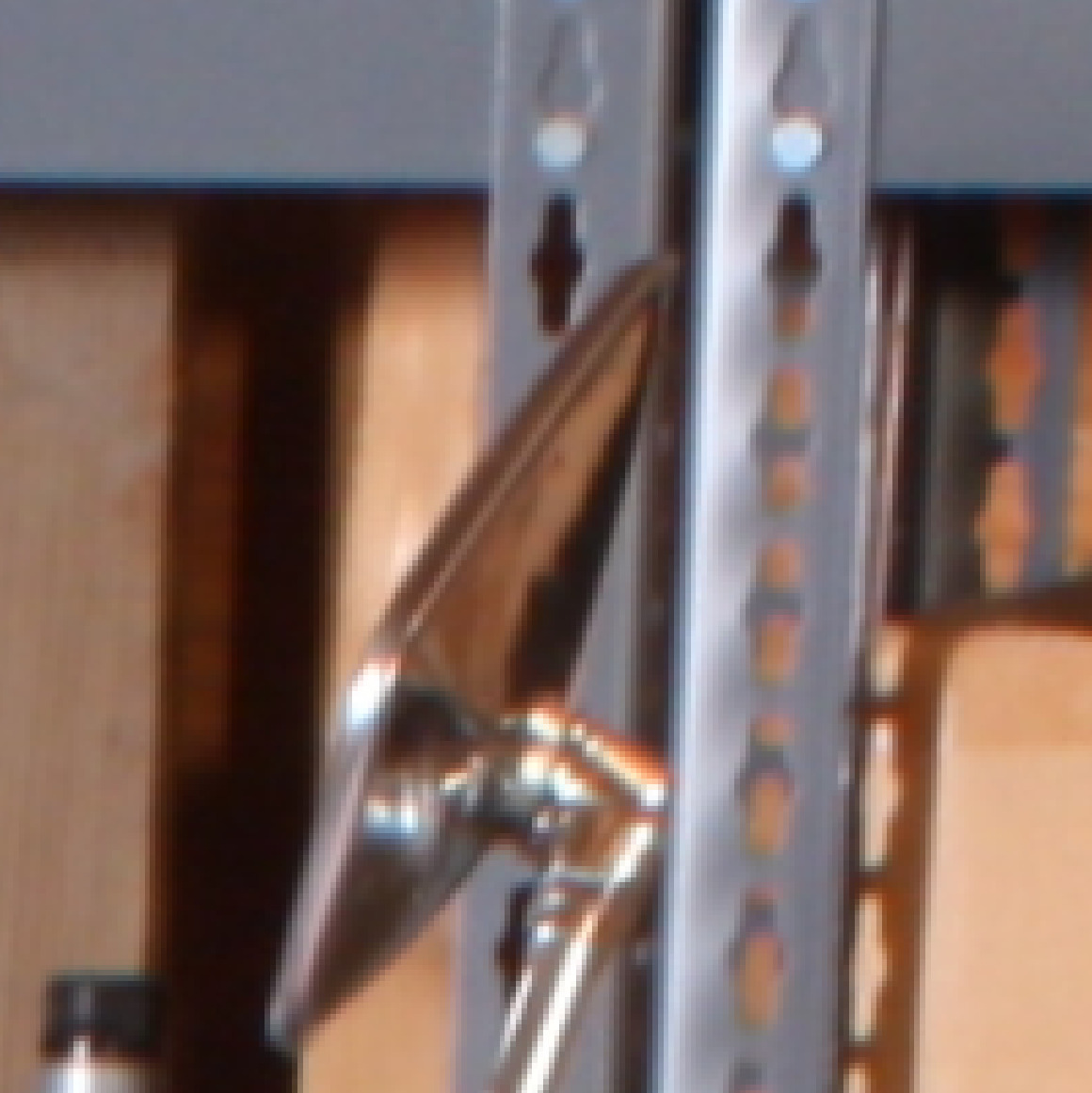
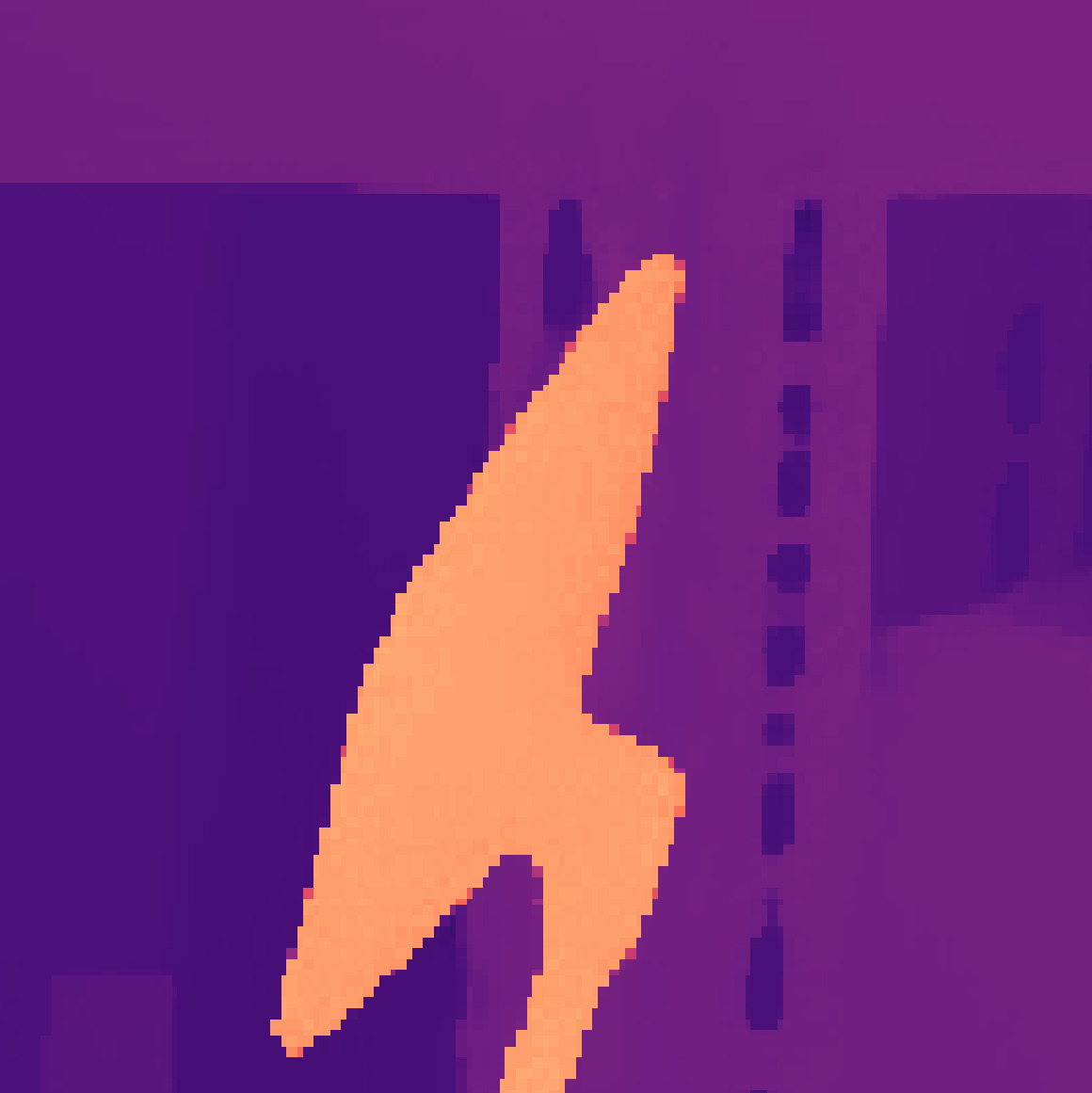
Drag the slider to compare NBS against ground truth and prior state-of-the-art methods. NBS resolves the holes in the containers, the complex shapes of cluttered objects, and the thin structures of the grill that other methods miss.
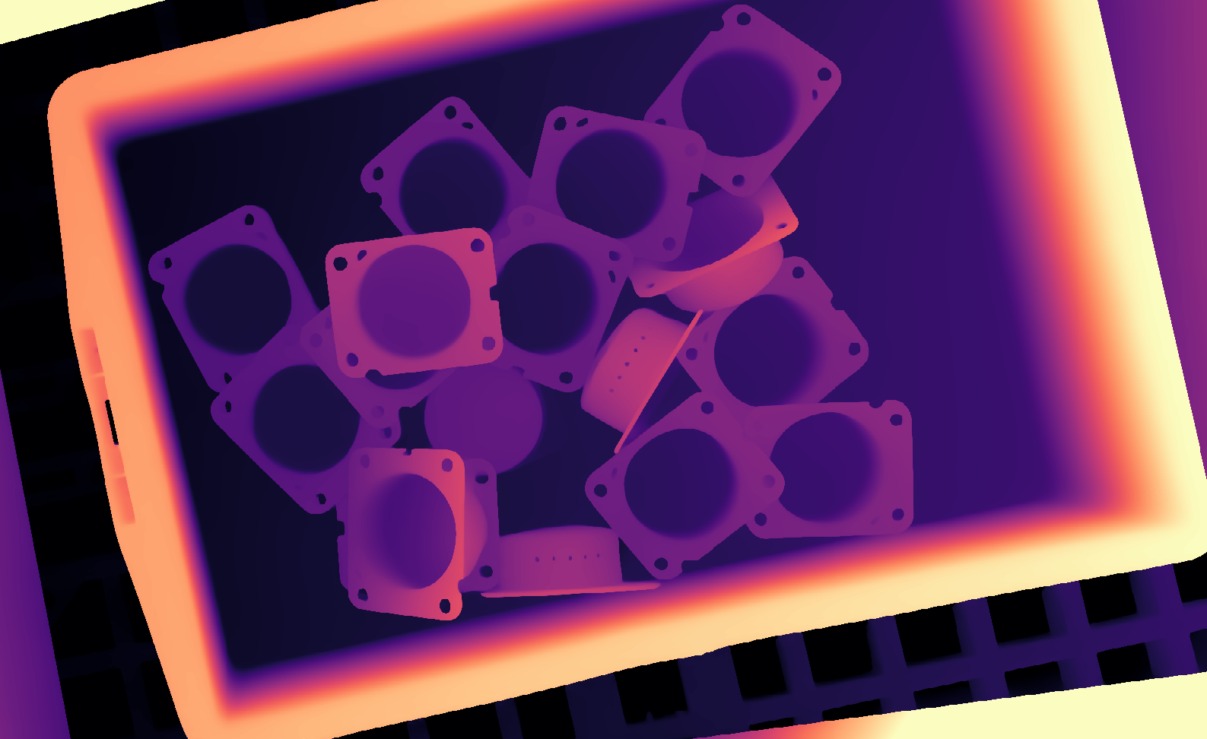
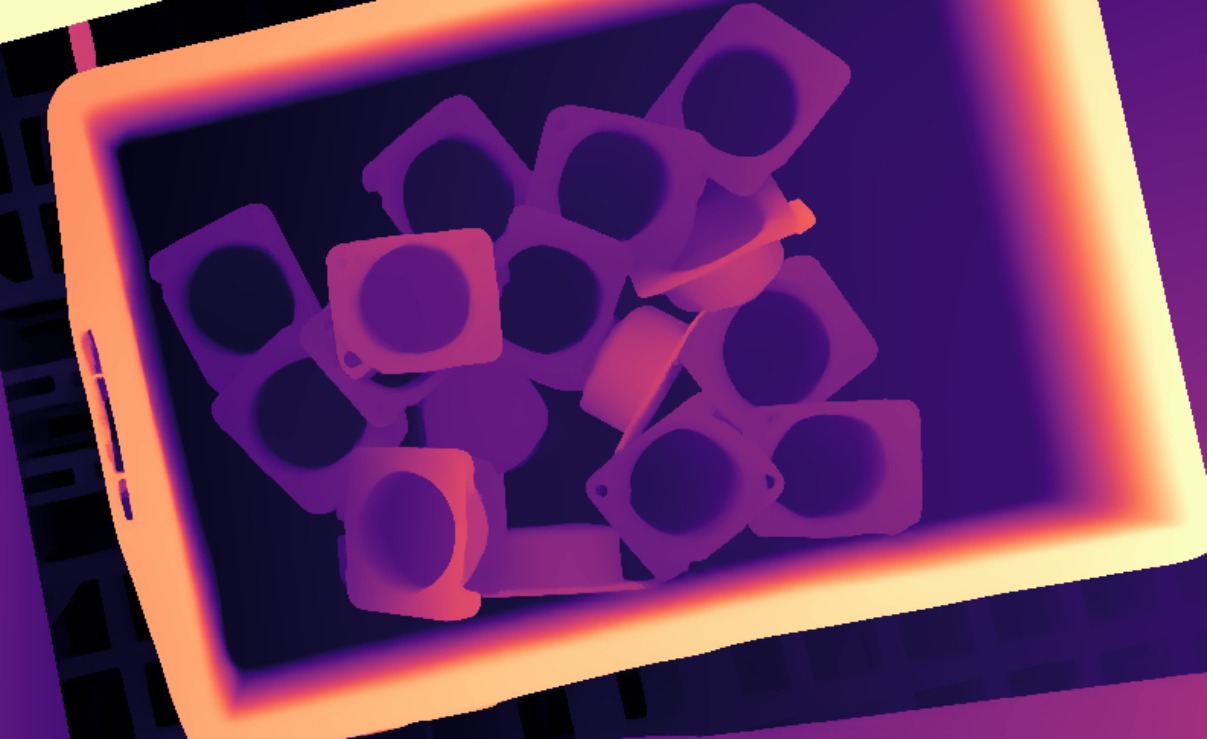
Drag anywhere on the image, or focus the handle and use ← → keys.
Method
Nothing but attention
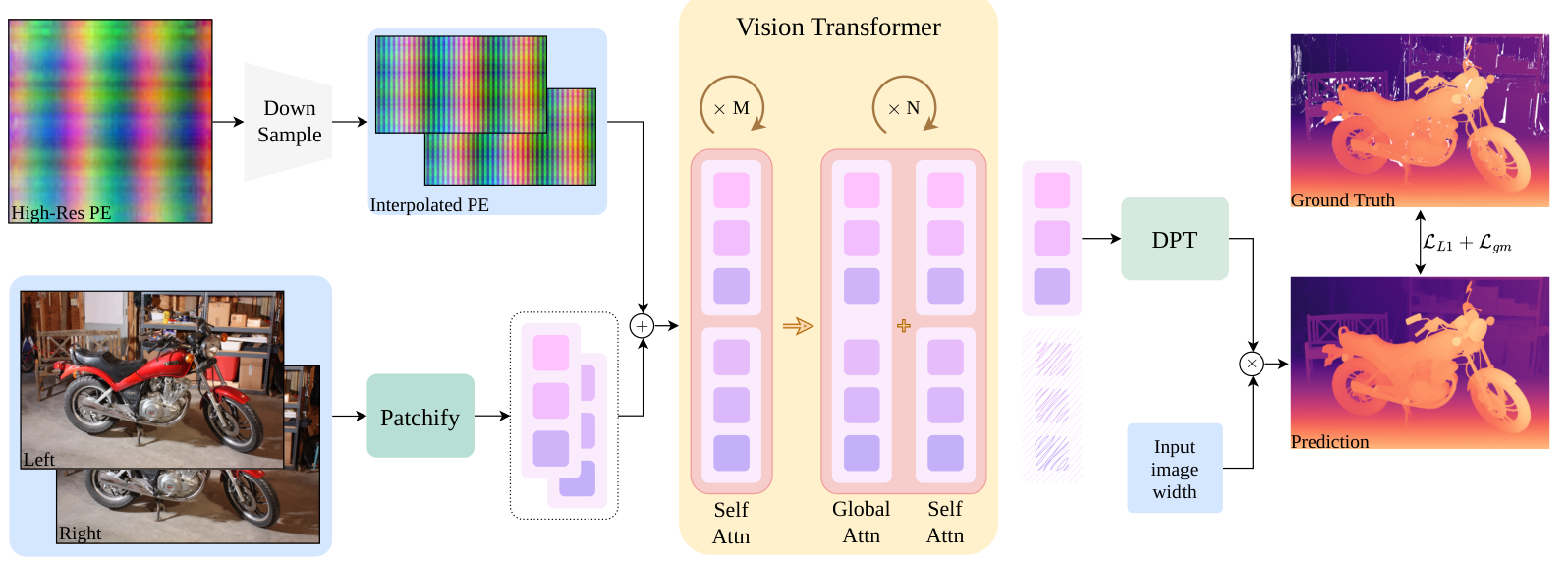
NBS is a single end-to-end Vision Transformer: patchify a rectified stereo pair, run alternating local and global self-attention over the joint token set, and decode disparity with a DPT head. No frozen depth experts, no correlation volumes, no iterative refinement.
A genuinely plain ViT
A DINOv2-initialized ViT-Large with local self-attention in early layers and alternating global attention thereafter. The same attention dynamically balances cross-image matching (stereo cues) and intra-image semantics (monocular priors) — including in occluded, transparent, and textureless regions.
High-resolution positional embeddings
Sub-pixel disparity needs fine-grained positional understanding. NBS upsamples DINOv2's 37×37 embedding grid to 148×148 — and 296×296 for 2K inference — cutting strict bad@0.5 error by up to 7.2 points and sharpening highly textured regions.
Data instead of biases
A multi-stage pipeline scales from a 966×546 base up to 1932×1330, progressively expanding the training data to a mixture of 2.4M internal synthetic scenes plus 13 public datasets. Pure scale replaces engineered geometry.
Quantitative results
State of the art, across the board
NBS sets the best marks on ETH3D and on two challenging new evaluations — procedurally generated SimpleProc scenes (a strict out-of-distribution test) and the industrial XYZ-IBD dataset re-purposed for stereo. Lower is better for all metrics.
| ETH3D | SimpleProc-S | SimpleProc-M | XYZ-IBD | |||||||||
|---|---|---|---|---|---|---|---|---|---|---|---|---|
| Method | EPE | bad@1 | bad@4 | EPE | bad@1 | bad@4 | EPE | bad@1 | bad@4 | EPE | bad@1 | bad@4 |
| CREStereo | 0.14 | 1.09 | 0.12 | 0.33 | 4.72 | 1.43 | 0.64 | 8.03 | 2.75 | 15.92 | 62.28 | 36.04 |
| CroCo | 0.15 | 1.14 | 0.18 | 0.45 | 6.94 | 1.82 | 0.91 | 9.58 | 3.75 | 34.98 | 84.94 | 67.95 |
| Selective-IGEV | 0.15 | 1.56 | 0.28 | 0.52 | 6.13 | 2.07 | 0.75 | 8.16 | 3.19 | 17.48 | 60.92 | 34.98 |
| FoundationStereo | 0.13 | 0.48 | 0.21 | 0.48 | 4.25 | 1.95 | 0.61 | 6.27 | 3.22 | 15.75 | 54.69 | 28.35 |
| S2M2 | 0.10 | 0.26 | 0.04 | 0.29 | 4.16 | 1.12 | 0.44 | 6.04 | 2.31 | 19.24 | 57.22 | 30.69 |
| NBS (Ours) | 0.09 | 0.16 | 0.02 | 0.25 | 3.03 | 0.63 | 0.40 | 4.22 | 1.26 | 11.39 | 55.61 | 23.39 |
EPE and bad@X in pixels; bold marks the best result per column. On SimpleProc, NBS cuts the severe-error rate (bad@4) of the next best model by nearly 50%.
Several times faster, several times lighter
A plain transformer maps perfectly onto modern GPU software stacks. With Flash-Attention and FP16, NBS runs 5.4× faster than its own FP32 baseline — and 4× faster with 2.8× lower peak memory than the best prior methods, at better accuracy.
Inference runtime
seconds per 966×546 stereo pair · A100 · FP16 · lower is better
| Method | Precision | Params (M) | TFLOPs | Runtime (s) | Mem (GB) | bad@1 |
|---|---|---|---|---|---|---|
| CREStereo | FP32 | 9.5 | 9.5 | 0.693 | 2.23 | 4.72 |
| CroCo | FP32 | 436.2 | 75.5 | 3.778 | 3.88 | 6.94 |
| NBS (Ours) | FP32 | 351.5 | 3.7 | 0.323 | 2.52 | 3.03 |
| Selective-IGEV | FP16 | 13.1 | 18.2 | 0.662 | 1.35 | 6.13 |
| FoundationStereo | FP16 | 374.5 | 25.9 | 0.872 | 6.74 | 4.25 |
| S2M2 | FP16 | 405.7 | 11.3 | 0.240 | 3.52 | 4.16 |
| NBS (Ours) | FP16 | 351.5 | 3.7 | 0.060 | 1.23 | 3.24 |
Measured on SimpleProc-S (966×546). Bold marks the best value within each precision group.
Reconstructions
Explore in 3D
Citation
BibTeX
@article{taamazyan2026nbs,
  title   = {NBS: No Bias Stereo},
  author  = {Taamazyan, Vage and Shen, Zhuowen and Hinterstoisser, Stefan and
             Dall'Olio, Alberto and Kalra, Agastya and Shandilya, Aarrushi and
             Li, Xin and Wang, Wenping and Venkataraman, Kartik},
  journal = {arXiv preprint arXiv:2608.28933},
  year    = {2026}
}